.png&w=384&q=75)
Priya Nair · September 14, 2026
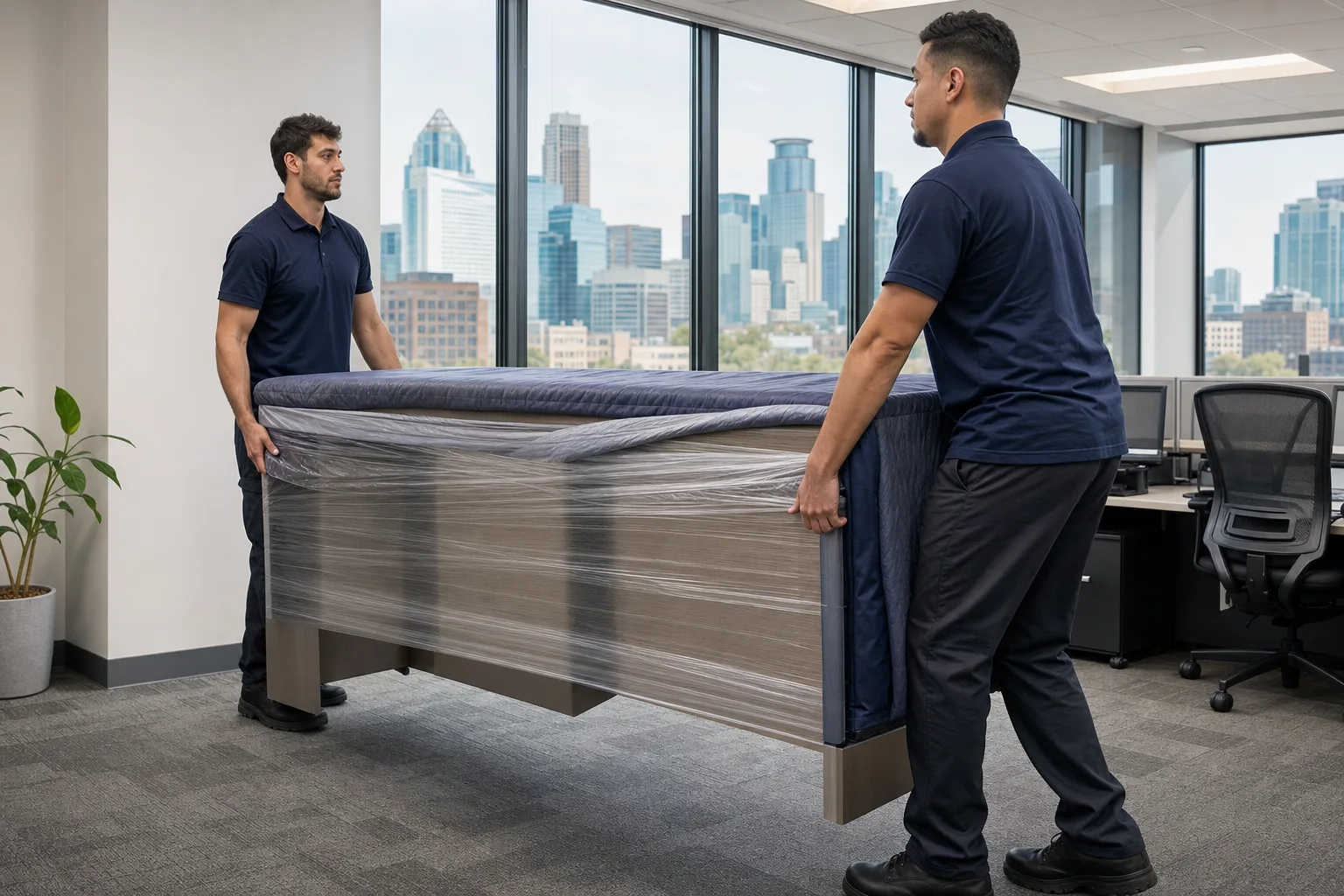
← All articlesIn the Twin Cities, commercial moving cost depends on space size, distance, crew and trucks, building access, packing and labeling, equipment, and timing. Minnesota commercial and office jobs are scoped case by case—not priced like a residential bedroom-count table or a single national average. Affinity’s commercial moving services page explains the product buckets (office, retail/warehouse, packing/labeling, furniture and equipment); the written free estimate is where crew, access plan, and responsibilities get documented for your actual addresses. Use the moving cost calculator only for a soft labor-range ballpark if you need a planning number before inventory is ready—then submit a free estimate with both locations, preferred dates, dock/elevator or loading notes, workstation or inventory details, and any specialty equipment so the quote matches the job.
If you are asking how much commercial movers cost in Minneapolis, what belongs in a commercial moving estimate, or whether an office relocation is priced like a big residential move, this guide owns the scope-and-pricing decode. For timeline, dock/COI, IT handoff, and a full quote-compare checklist, see Affinity’s related post on commercial move planning in the Twin Cities. For which load window fits downtime, see weekend vs after-hours office moves—timing is a cost driver here, not a remake of that post.
Commercial pricing is scope-first—not a residential bedroom table
Residential shoppers often start with bedroom count and a local planning band. Commercial and office moves do not work that way. The bill follows inventory volume, labeled workstations and files, specialty furniture or equipment, and building rules at both ends—not a “3-bedroom equivalent” guess. National 2026 office-cost tables that band small, mid, or large offices by workstation count can be useful desk context, but they are not Affinity prices and they are not a Twin Cities building-access reality check. Treat them as internet averages that vary; Affinity quotes the actual scope for your addresses.
A business move also adds stakeholders residential quotes rarely include: landlords, property managers, IT vendors, and destination readiness. Affinity’s commercial FAQ therefore prices Minnesota commercial movers jobs case by case: space size, distance, crew and trucks, access, packing, equipment, and timing—not a flat competitor-blog sticker.
What Affinity reviews before pricing the job
Affinity starts with the actual scope before labor is assigned. Align your estimate intake with what the live commercial product asks for:
- Both locations: origin and destination addresses so route, access, and crew needs can be planned together
- Building rules: docks, freight elevators, COI requirements, loading windows, and downtown or suburban parking constraints
- Workstations, files, and inventory: what moves, how it is labeled, and what stays
- Furniture and equipment: desks, seating, storage, and any item that needs dimension, weight, or disconnect review
- Packing and labeling needs: who packs, who labels, and how destination placement should read on the boxes
- Preferred timing: business hours, after-hours, weekend, or phased moves that reduce downtime
That review is the difference between a vague hourly guess and a written commercial scope your facilities lead can share with stakeholders.
What usually drives the commercial bill in Minneapolis–St. Paul
Once scope is on the table, Twin Cities bill drivers tend to cluster in the same places Affinity’s commercial FAQ lists—plus metro-specific access friction.
- Space size and volume: square footage matters less than how dense the workstations, files, fixtures, or back-room inventory are
- Distance and route: Minneapolis–St. Paul hops vs longer metro or outlying warehouse legs change truck and clock time
- Crew and trucks: headcount and vehicle mix follow inventory and access, not a one-size commercial rate card
- Loading access: docks, freight elevators, shared loading zones, and downtown parking or street permits can add hours even on a short haul
- Packing and labeling: commercial packing support and clear labels protect placement time at the destination
- Specialty furniture and equipment: items that need item-specific review change crew, gear, and sometimes schedule
- Timing windows: after-hours or weekend load slots can be the right downtime choice and a cost driver; for the timing tradeoff itself, use Affinity’s weekend vs after-hours office move guide rather than treating this post as that remake
Need residential crew-hour or packing-add-on math? Soft-link only: how much movers charge per hour in Minneapolis, labor-only vs full-service, and packing service cost add-on. Those feeders own residential bill math; this post owns commercial scope → price.
Office vs retail vs warehouse scope (same money page, different bill drivers)
Affinity’s commercial money page covers office, retail/warehouse, packing/labeling, and furniture/equipment under one Minnesota commercial movers product—same path, different bill drivers:
- Office: workstations, files, furniture, labeled inventory, building access, and destination placement planning; phased timing often shows up in the estimate
- Retail: fixtures, shelving, boxed inventory, and customer-facing spaces where downtime and loading windows matter as much as volume
- Warehouse / light industrial: rack or back-room volume, dock access, route details, and destination handoff for denser inventory
When the job is clearly an office suite, soft-pair Affinity’s office relocation services. Keep transactional commercial moving ownership on the commercial money page—neither product page is redesigned here.
What’s in a commercial moving estimate (so bids compare fairly)
A commercial moving estimate should make the included scope clear before work begins—not just a headline price. Affinity’s commercial FAQ frames commercial relocation services as coordinating people, trucks, packing needs, access plan, transport, and destination handoff. When you compare Minneapolis commercial moving companies, look for written scope, confirmed crew/truck needs, building-access questions, and explicit packing, labeling, equipment, and timing responsibilities—compare inclusions, not headline numbers alone.
For dock/COI, IT handoff, and a full quote-compare checklist, use the sibling commercial move planning post. This feeder stops at what belongs in scope so pricing can be fair.
Commercial equipment movers: item-specific review
Affinity’s live FAQ is direct: commercial equipment requires item-specific review. Share dimensions, weight, access constraints, disconnect requirements, and destination details during the estimate so the team can confirm whether the item fits available crew, equipment, and scope before you book—especially for machines, dense storage, or oversized pieces that will not clear a freight elevator without a plan.
Affinity path: commercial page → free estimate (calculator soft)
Stay inside Affinity’s published products—use them in order; this post does not redesign those pages.
Step 1 — Confirm product on commercial moving services
Open commercial moving services and confirm which buckets apply: office relocation, retail and warehouse moves, commercial packing and labeling, and furniture and equipment. If your query and suite layout are clearly office-first, soft-pair office relocation services (minimal downtime, docks, after-hours/weekend options, IT/furniture framing) without stealing that page’s product H1.
Step 2 — Request the written commercial estimate
Submit a free commercial moving estimate with both locations, preferred dates, access notes (dock, freight elevator, street load, COI), workstation or inventory details or photos, and any specialty equipment. Affinity’s published three-step commercial path is straightforward: request an estimate → confirm the scope (crew, truck, packing, labeling, timing, placement) → move from one plan. Optional: if inventory is not ready yet and you only need a soft labor-range planning number, use the moving cost calculator—then stop guessing and get the scoped quote. For when a ballpark is enough versus when you book against a written estimate, soft-read calculator ballpark vs written moving estimate. Same-day commercial scoping questions: call (612) 416-6640 (published on Affinity commercial and office CTAs).
Frequently asked questions
How much do commercial movers cost in Minneapolis / the Twin Cities?
Commercial moving cost depends on space size, distance, crew and trucks, access, packing, equipment, and timing. Minnesota commercial movers jobs are scoped case by case—not from a residential bedroom table or a national workstation sticker. Request a commercial moving estimate so Affinity can price the actual job, or start with a ballpark on the moving cost calculator for labor ranges only.
Why isn’t a commercial office move priced like a residential bedroom-count move?
Bedroom count is a weak commercial estimator. Office, retail, and warehouse jobs follow inventory density, labeled workstations and files, building access rules, equipment review, packing/labeling responsibilities, and timing windows. Those scope factors change the bill more than “how many rooms.”
What is included in a commercial moving estimate / written scope?
A written commercial scope should make crew and trucks, packing and labeling, access plan, transport, and destination handoff clear before work begins. Compare included scope across bids—not headline price alone. Affinity’s commercial path documents responsibilities in the estimate so stakeholders share one plan.
What scope factors change commercial pricing?
Space size and volume, distance/route, crew and trucks, loading access (docks, freight elevators, downtown parking), packing and labeling, specialty furniture/equipment, and timing windows. Twin Cities access friction and downtime constraints often matter as much as truck size.
How do office, retail, and warehouse commercial jobs differ in scope?
Office jobs emphasize workstations, files, furniture, and labeled inventory. Retail emphasizes fixtures, shelving, and boxed inventory under tighter downtime. Warehouse and light industrial emphasize denser back-room or rack volume and dock/route details. Same commercial money page; different bill drivers.
When should I use Affinity’s moving cost calculator vs going straight to a commercial free estimate?
Use the calculator only for a soft labor-range ballpark when you need a planning number before inventory is ready. Go straight to a free commercial estimate when you have both addresses, access notes, inventory or photos, equipment details, and preferred timing—so the written quote matches the job. The calculator is not Affinity’s final commercial quote.
What should I attach to the free estimate form?
Both locations, preferred dates, dock/elevator or loading notes, COI or building rules if known, workstation or inventory lists and photos, floor plans when available, specialty equipment dimensions/weight/disconnect needs, and preferred timing (business hours, after-hours, weekend, or phased). Call (612) 416-6640 if you need help scoping before you submit.
How is commercial equipment handled in scope?
Item-specific review: dimensions, weight, access constraints, disconnect requirements, and destination details. Affinity confirms whether the item fits available crew, equipment, and scope before booking—do not assume oversized or connected equipment is included until it is written into the estimate.
Ready to price a Twin Cities commercial or office move from real scope? Start on Affinity’s commercial moving services page, then request a free commercial moving estimate with both addresses, access, inventory, equipment, and timing. Soft pair: office relocation services when the job is clearly an office suite. Soft planning only: moving cost calculator for labor-range ballparks before inventory is ready.
Related reading: commercial move planning Twin Cities · office move weekend vs after-hours · calculator ballpark vs written estimate · movers charge per hour Minneapolis.
Affinity Moving · USDOT 4134991 · MnDOT 385091 · MC 1739901
Last updated: 2026-09-14